
Depression isn’t one condition. Neither is anxiety.
Most clinics treat them like they are — and most patients pay for it in failed prescriptions and wasted months.
Live Well Psychiatry operates differently. Dr. Hoopes, Dr. Facer, Dr. Kennington and their team use structured diagnostic evaluations, subtype-matched prescribing, and a 23-item monitoring scale at every visit to make sure treatment is actually working — and to catch it early when it isn’t.
Psychiatric Evaluation & Diagnosis
Around 50% of Americans experience a mental health condition at some point in their lives. An accurate initial evaluation is what separates treatment that works from years of trial and error. Our team offers extensive initial consultations, including research-level surveys, to get your diagnosis right the first time.
What happens during our initial psychiatric evaluations?
Our diagnostic process uses a standardized interview based on the Diagnostic and Statistical Manual of Mental Disorders (DSM-5) — the gold standard for psychiatric diagnosis.
At the first appointment we conduct a comprehensive interview collecting lifetime symptoms. It is designed to establish accurate diagnoses including depression, anxiety disorders, ADHD, and mania. Diagnoses are clearly explained to you and become the foundation for future treatment plans.
The same interview is used by every provider in our clinic, for every patient — one consistent standard of care.
How do I prepare for my first appointment?
Fill out the new patient paperwork and submit it to the office beforehand. You will also complete same-day research-level evaluation surveys, sent by text or email and available on the patient portal.
Please complete each day’s surveys at least 30 minutes before your appointment start time. These scientific questionnaires are separate from the downloadable forms and give your provider a full picture of your mental, emotional, and physical health.
What should I expect during the visit itself?
You will meet with your provider for approximately an hour. They review your forms and ask questions to get to know you and assess your condition.
It may feel like an interview. Be honest and frank — your provider needs to understand precisely how you are feeling and what you are thinking. Live Well Psychiatry is a safe, confidential, judgment-free zone.
At the end of the appointment your provider gives you a diagnosis, discusses treatment options, and can point you to resources to learn more about your condition.

Medication Management
Medication is often essential — but many patients cycle through several drugs before finding one that works. Our team uses an extensive assessment to prescribe the right medication the first time, then monitors your response with data rather than impressions.
What is medication management?
It is the process of prescribing medicine and monitoring its effectiveness. Our goal is to help you feel better as quickly as possible.
Your first follow-up appointment comes roughly a month after you begin your medication. Depending on how you respond, your provider may schedule another a month later, or space appointments differently.
What happens during a medication check appointment?
You complete validated rating scales for depression and anxiety at every appointment. Your answers let your provider track your response in detail and adjust your prescription when needed.
You then review your responses together with your provider, who asks about your symptoms and overall wellbeing. Bring up any concerns about your treatment here.
How do I know if my medication is working?
We help you understand the normal range of both positive and negative emotions, and treat toward that range using scientifically-backed rating scales. As your scores decrease across appointments, it shows your treatment is working.
You should also start to feel better — you might find you do not lose your temper as quickly, or feel less irritable. Medication needs time to take effect, so stay patient and be honest with your provider about your experience.

Transcranial Magnetic Stimulation (TMS)
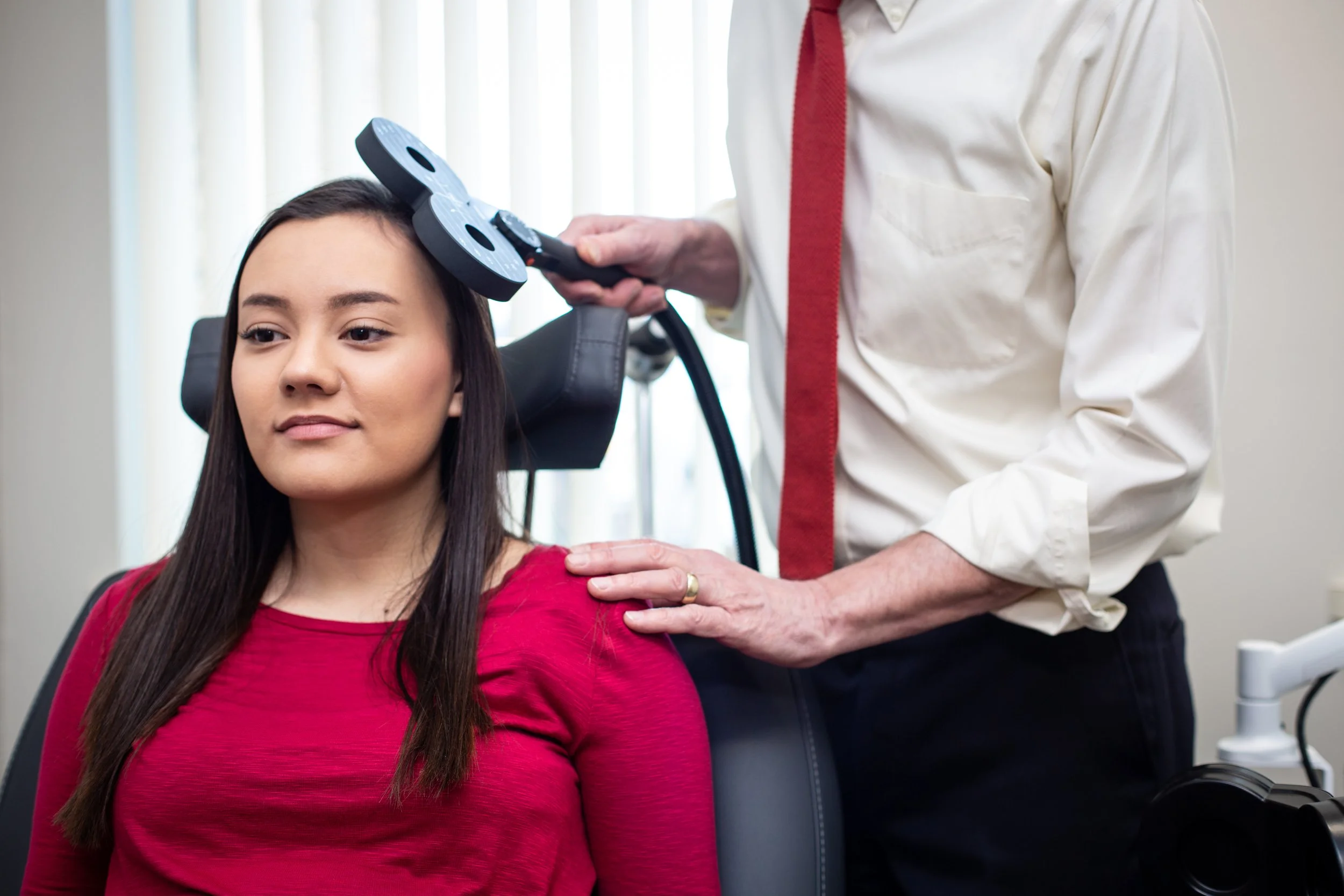
TMS is an innovative treatment for treatment-resistant depression and OCD. Our team trained with internationally-leading researchers to offer two FDA-approved protocols using state-of-the-art MagVenture® equipment.
What is TMS?
TMS is an FDA-approved therapeutic option for treatment-resistant depression and Obsessive-Compulsive Disorder. Treatment-resistant depression occurs when you have tried at least three medications without relief — or experienced side effects that negate the benefits.
It is a pharmaceutical-free option using a magnetic pulse, similar to the field created in an MRI, to stimulate neurotransmitter activity in your brain. We offer a 10-minute treatment or an express treatment taking 3–9 minutes.
We personalize treatment using your depression and anxiety survey scores, and use neuro-cardiac targeting to position the device precisely — and identically — every session.
Insurance usually covers the 10-minute treatment, and we offer an affordable self-pay option for express treatments.
Am I a good candidate for TMS?
Generally, if you are in good health aside from your depression, you are most likely a candidate.
You should not have TMS if you have metal in your head — aneurysm clips, cochlear implants, or brain stimulators. Titanium plates and metal dental fillings are nonmagnetic and safe.
What happens during a TMS treatment?
You sit in a comfortable chair while your provider positions the device near your head, using precise measurements and neuro-cardiac targeting to identify the exact treatment location.
Treatment lasts 3–20 minutes depending on your needs and protocol. It is painless, though you will feel and/or hear a tapping sensation. No sedatives are needed, so you can drive yourself to and from appointments and return to normal activities immediately.
We recommend pairing TMS with counseling, behavioral activation, or life-journaling. Our MagVenture machine is also FDA-approved for treating OCD.
Telehealth
It is not always convenient to come into the office. Our team offers telemedicine for convenient, confidential psychiatric care — from your home, your office, or any private place with a reliable internet connection.
What is telemedicine?
Telemedicine appointments are similar to office visits, without the drive. We provide all necessary paperwork and assessments on the patient portal, so your provider assesses your symptoms with the same information you would give in person — and can recommend treatments and send prescriptions to your pharmacy.
We use Zoom and recommend downloading the app before your appointment. You will receive a link to join your secure, private meeting.
What are the benefits of telemedicine?
Cost. No gas, parking, or transportation costs — and no additional child or elder care, since you do not leave home or work.
Time. No time off work, no waiting room. Schedule during a break in your working day.
Distance. Geography stops being a barrier. Whether you live outside city limits or work across town, you can attend from anywhere.

What treatment actually looks like
The same sequence for every patient, every time — so nothing depends on which provider you happen to see.
Structured evaluation
A DSM-5-based interview plus research-level surveys establish an accurate diagnosis before anything is prescribed.
Subtype-matched plan
Treatment is matched to your specific presentation — not to a broad diagnostic label.
Measured at every visit
Validated depression and anxiety scales at each appointment show whether treatment is working.
Adjusted early
When the numbers do not move, we change course — instead of waiting months to find out.
What patients say
“Best Doctor in the state of Idaho. Specializes in wholistic integrative medicine.”
“Dr. Hoopes is very knowledgeable and gets your medication spot on. Been to others in the past and he definitely knows what he’s doing. Going to him for years now and convenient appointments via Zoom.”
“Crystal Odegard is knowledgeable, empathetic, patient, and non-judgmental. She meets you where you’re at and works hard to support you. And the virtual appointments work smoothly and are very helpful for balancing appointments with my work schedule.”
“Kristin was amazing. She listened and provided great feedback. I highly recommend Live Well.”
Get the diagnosis right the first time.
Telehealth throughout Idaho, with most private insurance accepted. Text or call to schedule your initial evaluation.
